Best Materials For Kitchen Remodeling Seattle WA: Climate And Moisture Resistance

Seattle Kitchen Remodeling Material Challenges in 2026

Material selection in Seattle kitchens is not just about looks—it’s about performance in constant moisture, temperature swings, and indoor humidity. In a climate where condensation, rain, and limited ventilation can quietly wear down materials, choosing the wrong surfaces leads to swelling cabinets, warped flooring, and premature replacements. That’s where expertise comes into play. The key question homeowners ask is simple: which materials actually hold up long term in these conditions without driving up maintenance costs?
The answer lies in balancing durability, moisture resistance, and lifecycle value. In kitchen remodeling Seattle WA, materials must handle humidity levels that often exceed national averages while still meeting modern design expectations. This guide breaks down the materials that perform, how they behave over time, and what property owners need to factor in before making decisions that impact both daily use and long-term property value.

Moisture-Resistant Cabinet Materials for Long-Term Durability

Cabinet systems take the biggest hit in Seattle kitchens. Between steam from cooking, seasonal humidity, and poor airflow in older homes, cabinet boxes and doors are constantly under stress. The wrong material doesn’t fail overnight—it gradually breaks down, leading to soft edges, delamination, and structural weakening that creeps up on you.
The most reliable cabinet materials in moisture-prone environments are engineered to resist expansion and contraction. Plywood-core cabinets outperform particle-board cabinets in almost every measurable category. Data from remodeling industry reports show that plywood cabinets can last 20–30% longer in humid environments than standard MDF-based units. That difference becomes critical in Seattle’s climate.

Why Material Core Matters More Than Finish

Many homeowners focus on cabinet finishes, but the core material is what determines long-term durability. Moisture penetrates through seams, edges, and hardware points. Once inside, low-density materials begin to swell.
High-performance cabinet structures typically include:
  • Multi-ply plywood construction for dimensional stability
  • Water-resistant adhesives that prevent layer separation
  • Sealed edges to block moisture intrusion
  • Solid wood face frames that handle repeated expansion cycles
MDF still has its place, particularly for painted finishes, but in high-moisture kitchens it needs proper sealing and ventilation support. Without that, it’s only a matter of time before it starts to break down.

Performance Comparison Of Cabinet Materials


Material Type


Moisture Resistance


Lifespan (Seattle Conditions)


Maintenance Level


Cost Range


Plywood Cabinets


High


15–25 years


Low


Medium–High


MDF Cabinets


Moderate


8–15 years


Medium


Medium


Particle Board


Low


5–10 years


High


Low


Solid Wood


Moderate


15–20 years


Medium


High


The table makes one thing clear—cutting corners upfront often leads to higher replacement costs down the line.

Moisture Exposure Zones Inside Cabinets

Not all cabinets are exposed equally. Sink bases, corner units, and cabinets near dishwashers are the most vulnerable. These zones experience repeated moisture exposure and require reinforced materials or protective coatings.
Key stress points include:
  • Sink cabinet floors where leaks go unnoticed
  • Areas near plumbing lines and garbage disposals
  • Upper cabinets are exposed to steam from cooking
  • Corner joints where airflow is limited
Ignoring these zones is where many remodels fall short. The real value comes from thinking a few steps ahead and reinforcing high-risk areas before issues start.

Industry Trends In 2026 Cabinet Materials
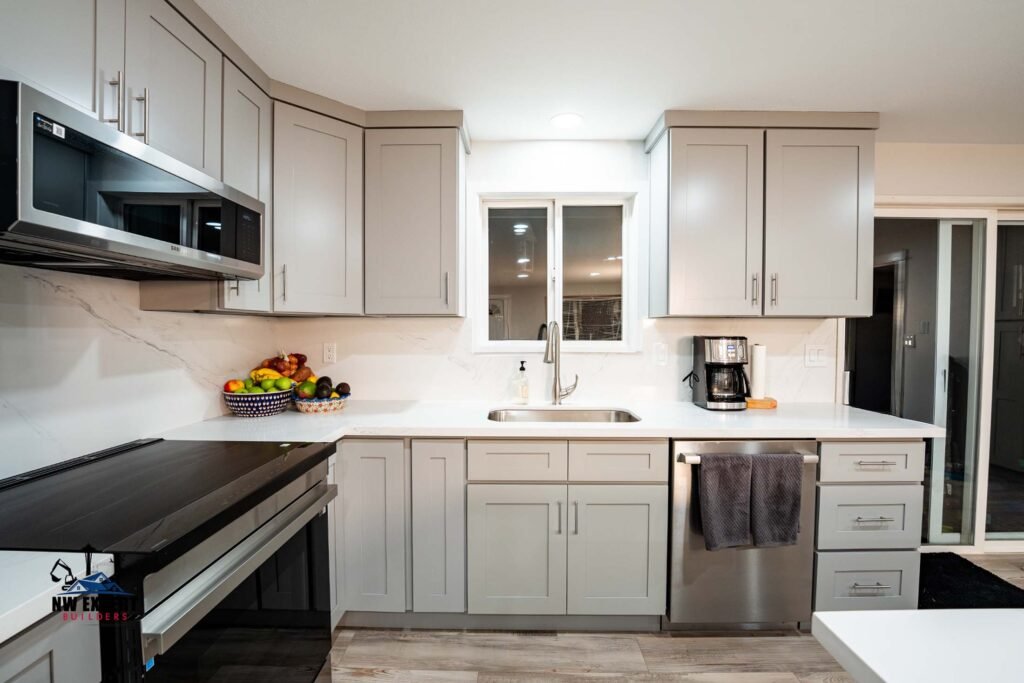
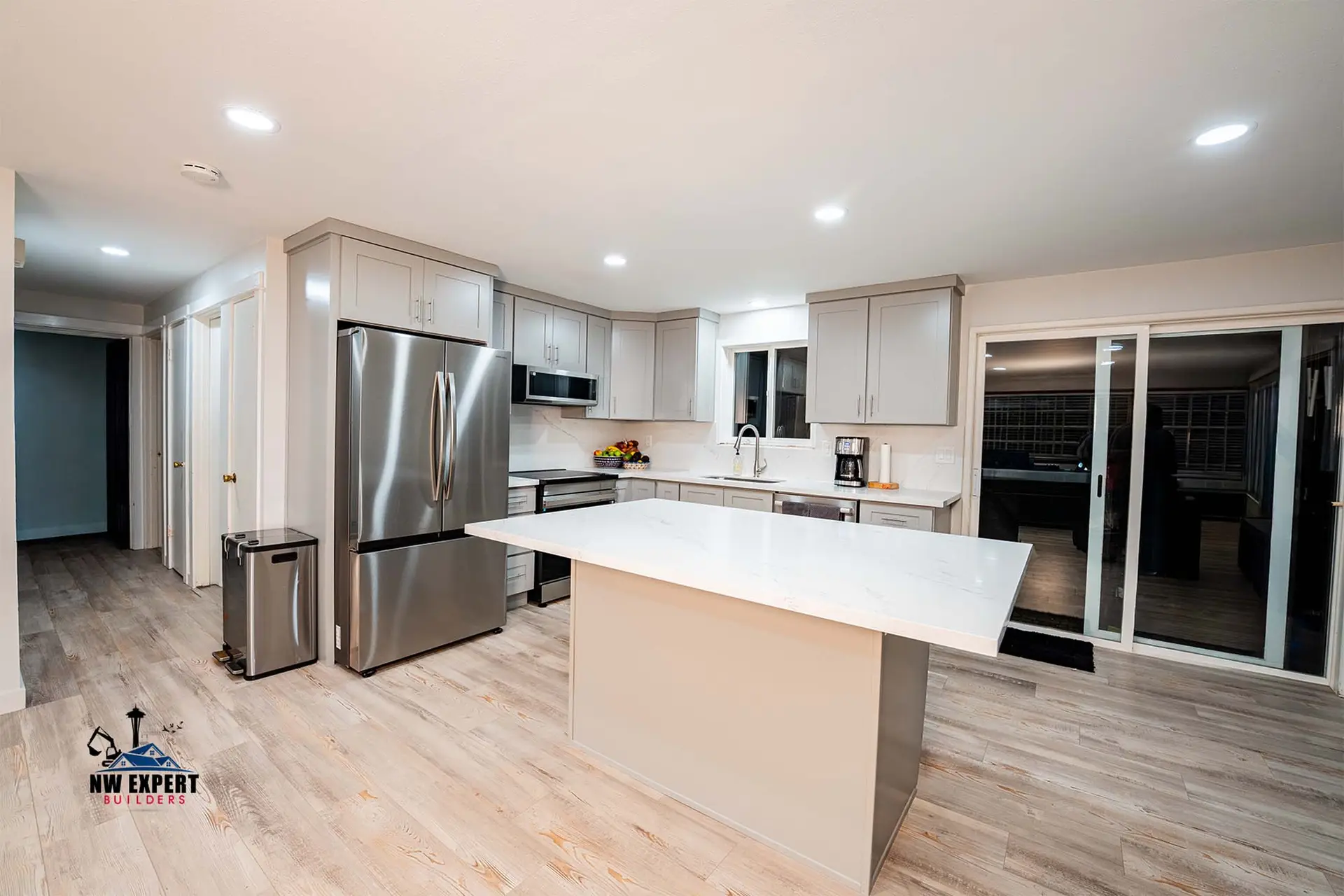
Seattle kitchen remodeling trends in 2026 show a shift toward hybrid cabinet systems—plywood boxes combined with thermofoil or laminate finishes designed to resist moisture penetration. These systems reduce maintenance while keeping costs manageable.
Another rising trend is the use of low-VOC, moisture-resistant coatings, which not only improve durability but also support indoor air quality—an increasingly important factor in modern remodeling decisions.
Cabinets are not just storage—they’re structural elements that define how long a kitchen performs without issues. Choosing the right material isn’t about preference; it’s about understanding how moisture behaves over time and staying one step ahead of it.

Transform Your Home with Expert Builders

From remodeling to full construction, NW Expert Builders delivers quality craftsmanship, modern design, and seamless project execution—start your free consultation today.

Countertop Materials That Handle Humidity And Daily Wear

Countertops in Seattle kitchens face a double challenge—constant surface use and exposure to moisture fluctuations. Between cooking, cleaning, and condensation, countertops are under pressure every single day. The wrong material doesn’t just stain or scratch—it absorbs moisture, expands, and gradually loses structural integrity.
Quartz has become the go-to material for a reason. It’s non-porous, highly resistant to water absorption, and requires minimal upkeep. Industry data indicates that quartz surfaces absorb less than 0.5% moisture, making them one of the most stable options in humid environments. That’s a game-changer in regions where moisture is part of everyday life.

Why Porosity Determines Long-Term Performance

Porous materials like natural stone can still perform well, but they require ongoing maintenance. Granite, for example, needs periodic sealing to prevent moisture penetration. Skip that step, and you’ll start seeing staining and micro-cracking over time.
Quartz, on the other hand, is engineered to eliminate those risks. It doesn’t rely on sealants to maintain performance, which reduces long-term maintenance costs.

Most Reliable Countertop Materials In Seattle Kitchens

  • Quartz surfaces with high-density resin binding
  • Sealed granite with regular maintenance schedules
  • Solid surface materials with seamless installation
  • Porcelain slabs with low water absorption rates
Each material has its place, but the difference comes down to how much upkeep you’re willing to handle. In most cases, homeowners are leaning toward low-maintenance solutions that don’t require constant attention.

Wear And Moisture Resistance Comparison

Durability isn’t just about water—it’s also about how surfaces hold up under daily use. Heat exposure, knife impact, and cleaning chemicals all play a role.
Quartz leads in consistency, while granite offers natural strength with added maintenance. Porcelain is gaining traction in 2026 due to its resistance to both heat and moisture, making it a strong contender for long-term performance.

Hidden Factors That Affect Countertop Lifespan

Several overlooked factors influence how well countertops perform over time:
  • Installation quality and seam sealing
  • Substrate support and cabinet alignment
  • Exposure to direct sunlight causing expansion
  • Cleaning products that weaken protective layers
Even the best material can underperform if installation isn’t dialed in correctly. Precision matters, especially when dealing with materials that expand and contract.

Cost Versus Longevity Considerations

Upfront costs often steer decisions, but lifecycle cost tells a different story. Quartz may come with a higher initial price tag, but its low maintenance and long lifespan offset that over time.
In Seattle’s remodeling market, homeowners are increasingly prioritizing:
  • Long-term durability over short-term savings
  • Materials that reduce maintenance time
  • Surfaces that maintain appearance without constant upkeep
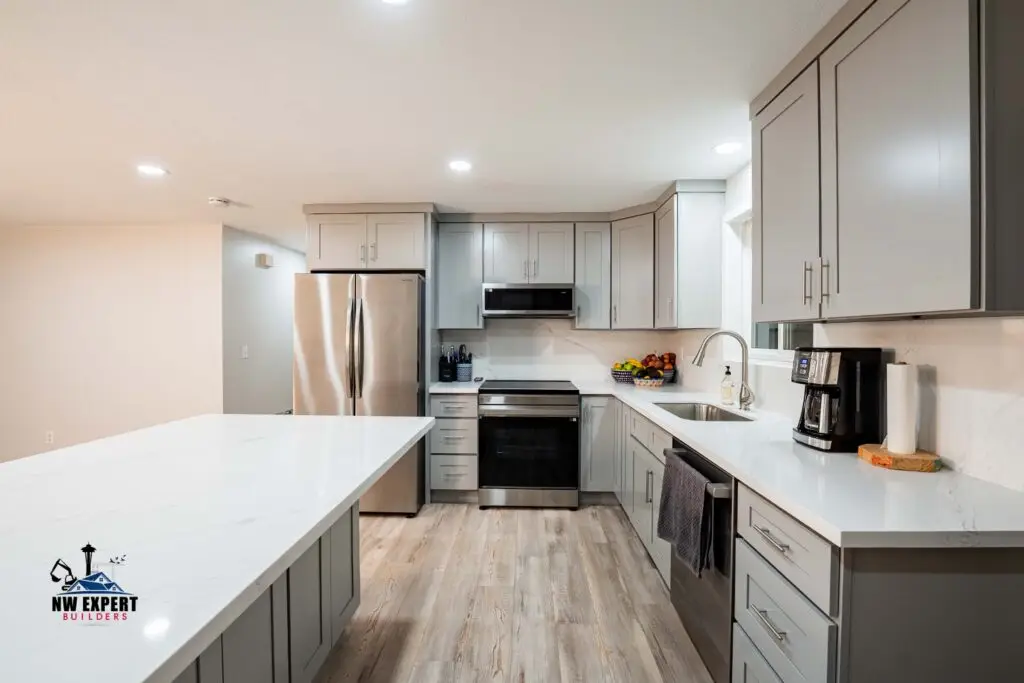
That shift reflects a broader trend—people want kitchens that work as hard as they do, without constant repairs or adjustments.
Countertops are one of the most used surfaces in any home. Choosing the right material isn’t just about aesthetics—it’s about performance, resilience, and making sure the surface holds up under real-world conditions year after year.

Flooring Options That Resist Water Damage And Temperature Changes

Flooring in Seattle kitchens takes a beating from below. Moisture doesn’t just come from spills—it seeps in through subfloors, humidity fluctuations, and temperature shifts that cause expansion and contraction over time. If the material isn’t built to handle that, it starts to buckle, gap, or warp before you know it.
Waterproof and water-resistant flooring options are no longer optional—they’re standard for long-term performance. Luxury vinyl plank (LVP) has become a front-runner in kitchen remodeling Seattle WA projects because of its dimensional stability and resistance to moisture. Unlike traditional hardwood, LVP doesn’t absorb water, which makes it far more predictable in humid environments.

Why Subfloor Compatibility Matters

Many flooring issues don’t start at the surface—they begin underneath. In Seattle homes, subfloors can retain moisture longer due to limited airflow and cooler temperatures. If the top layer isn’t compatible with that environment, problems creep in quickly.
Top-performing flooring systems account for:
  • Moisture barriers between subfloor and finish material
  • Flexible installation systems that allow expansion
  • Tight locking mechanisms that prevent water seepage
  • Underlayment designed for damp conditions
Ignoring subfloor conditions is like building on shaky ground—it might look fine at first, but it won’t hold up over time.

Best Flooring Materials For Moisture Resistance

  • Luxury vinyl plank with rigid core construction
  • Porcelain or ceramic tile with sealed grout lines
  • Engineered hardwood with moisture-resistant layers
  • Waterproof laminate with high-density fiberboard core
Each option offers a different balance between aesthetics and performance. Tile leads in water resistance but can feel cold underfoot. LVP offers flexibility and comfort while maintaining durability. Engineered hardwood bridges the gap between natural appearance and improved stability.

Temperature Fluctuation And Expansion Control

Seattle’s climate isn’t extreme, but the constant shifts between damp and dry conditions create subtle movement in materials. Over time, that movement causes gaps or pressure points in rigid flooring systems.
Modern flooring solutions are designed to handle these shifts through layered construction. Rigid core vinyl and engineered wood use multiple layers to stabilize the material, reducing the risk of movement.

2026 Flooring Trends In Seattle Remodeling
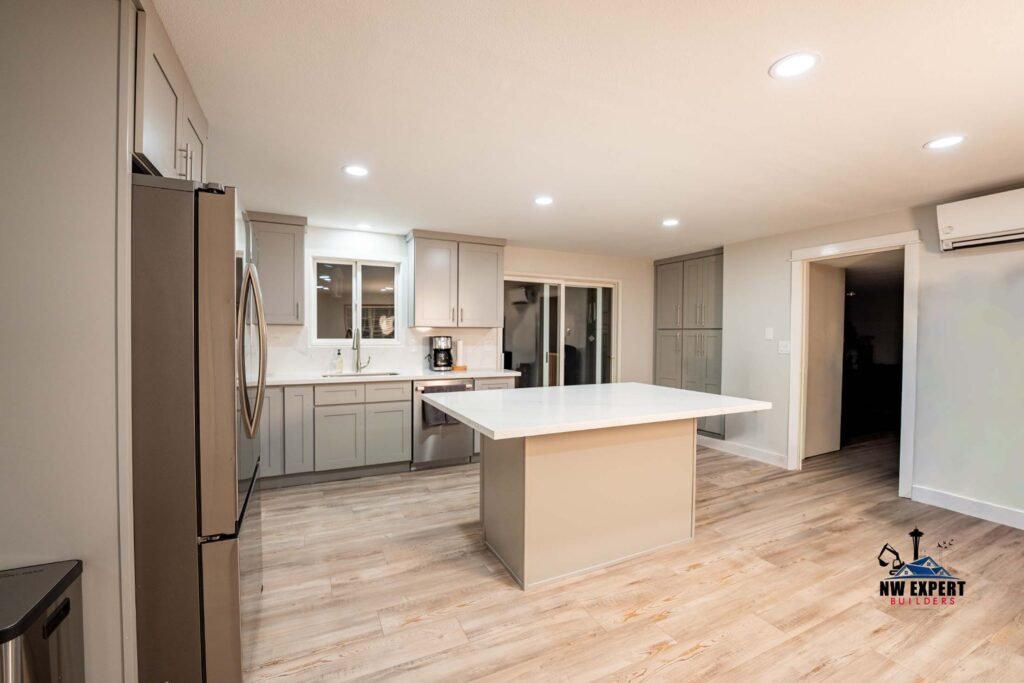
Data from remodeling reports shows a steady rise in demand for waterproof flooring, with LVP installations increasing by over 35% in the past two years. Homeowners are moving away from traditional hardwood in kitchens, recognizing the long-term risks associated with moisture exposure.
Another key trend is wider plank flooring, which reduces seams and limits moisture entry points. Fewer seams mean fewer opportunities for water to penetrate—simple but effective.

Best Wall Finishes And Backsplashes For High Moisture Kitchens

Walls in a kitchen often fly under the radar, but in Seattle’s climate, they play a critical role in moisture control. Steam, splashes, and condensation constantly interact with wall surfaces. If those surfaces aren’t sealed properly, moisture starts to seep in, leading to peeling paint, mold growth, and long-term structural damage.
Backsplashes and wall finishes act as the first line of defense. The goal is simple—create a barrier that prevents moisture from penetrating while still maintaining visual appeal.

Moisture Resistance Starts With Surface Sealing

The effectiveness of any wall finish depends on how well it resists water penetration. Porous materials without proper sealing quickly become weak points in the kitchen.
High-performing wall systems typically include:
  • Non-porous tile surfaces that repel water
  • Epoxy or sealed grout that prevents moisture absorption
  • Moisture-resistant drywall (green board) behind finished surfaces
  • High-quality paint with mildew-resistant additives
These layers work together to create a system that blocks moisture rather than absorbing it.

Most Reliable Backsplash Materials

  • Ceramic and porcelain tile with sealed grout lines
  • Glass panels that eliminate grout lines entirely
  • Quartz slab backsplashes for seamless protection
  • Stainless steel panels in high-use cooking zones
Glass and slab backsplashes are gaining traction because they reduce joints and seams. Fewer seams mean fewer entry points for moisture, which directly improves long-term durability.

Hidden Risk Areas Behind Walls

Moisture doesn’t just affect visible surfaces—it can build up behind walls if ventilation isn’t adequate. Areas behind sinks, stoves, and dishwashers are especially vulnerable.
Key factors that influence wall durability:
  • Ventilation efficiency and airflow
  • Proper sealing around fixtures and edges
  • Quality of installation and material transitions
  • Exposure to repeated steam cycles
If moisture gets trapped behind surfaces, it creates conditions for mold and structural weakening. That’s why installation precision is just as important as material selection.

2026 Design And Performance Trends

Seattle homeowners are leaning toward full-height backsplashes that extend from the countertop to the cabinet or the ceiling. This approach not only improves aesthetics but also increases protection by covering more surface area.
Another trend is the use of antimicrobial coatings, which help prevent mold growth in high-moisture zones. These coatings are becoming standard in modern remodeling projects focused on long-term performance.
Wall finishes aren’t just decorative—they’re functional barriers. Choosing the right system ensures that moisture stays where it belongs and doesn’t compromise the structure behind the scenes.

Appliance Materials And Finishes That Prevent Corrosion Issues

Appliances are often overlooked when discussing material performance, but in a moisture-heavy environment like Seattle, they’re just as vulnerable as cabinets and flooring. Over time, exposure to humidity and condensation can lead to corrosion, surface degradation, and reduced lifespan.
Stainless steel remains the industry standard, but not all stainless finishes are created equal. Lower-grade steel can still corrode if it’s not properly treated or maintained.

Why Finish Quality Matters More Than Material Type

The protective layer on appliances determines how well they resist moisture. Fingerprint-resistant coatings, anti-corrosion treatments, and sealed seams all play a role in durability.
High-quality appliance finishes offer:
  • Resistance to oxidation and rust formation
  • Easier cleaning with less residue buildup
  • Improved longevity in humid environments
  • Protection against chemical exposure from cleaning agents
Skipping these features often leads to visible wear much sooner than expected.

Most Durable Appliance Finishes For Kitchens

  • Brushed stainless steel with anti-corrosion coating
  • Powder-coated finishes that seal the surface
  • Matte finishes that reduce moisture visibility
  • Enamel-coated surfaces with protective layering
These finishes are designed to handle daily exposure without breaking down. They also reduce maintenance by preventing buildup and staining.

Environmental Factors That Accelerate Corrosion

Several conditions increase the risk of appliance wear:
  • High indoor humidity levels
  • Poor ventilation around cooking areas
  • Frequent temperature changes causing condensation
  • Exposure to harsh cleaning chemicals
Addressing these factors extends appliance lifespan and reduces replacement costs.

Market Trends And Longevity Insights

In 2026, appliance manufacturers are focusing on improved coatings and sealed components. Reports show that newer models with advanced finishes can last 15–20% longer in humid environments compared to older designs.
Another growing trend is integrated ventilation systems that reduce moisture buildup during cooking. These systems help control humidity at the source, improving overall kitchen performance.
Appliances are long-term investments. Choosing the right finish ensures they continue to perform without premature wear, even in challenging conditions.

Cost Factors And Material Lifespan Trends In 2026 Renovations

Cost is always part of the equation, but focusing only on upfront pricing can lead to higher expenses down the line. In Seattle, where moisture accelerates wear, lifecycle cost becomes the real benchmark.
Materials that cost more initially often deliver better value over time because they require fewer repairs and replacements.

Key Factors That Influence Remodeling Costs

  • Material quality and moisture resistance
  • Installation complexity and labor requirements
  • Long-term maintenance needs
  • Expected lifespan under local conditions
Balancing these factors is where smart planning comes into play.

Lifespan Trends Across Common Materials

Recent remodeling data shows clear patterns:
  • Plywood cabinets outlast particle board by up to 10 years
  • Quartz countertops maintain performance with minimal upkeep
  • Waterproof flooring reduces replacement frequency
  • Sealed wall systems prevent structural damage
These trends highlight the importance of investing in materials that can withstand environmental conditions.

Budget Allocation Strategy

A practical approach is to allocate more budget toward high-impact, high-exposure areas like cabinets, countertops, and flooring. These elements experience the most wear and directly affect long-term performance.
Lower-impact areas can be adjusted to balance overall cost without compromising durability.

2026 Market Insights

Material costs have stabilized compared to previous years, but demand for moisture-resistant products continues to rise. Homeowners are prioritizing durability, recognizing that cutting corners often leads to higher long-term expenses.
The shift is clear—people are thinking long term, focusing on materials that hold up rather than just looking good on day one.

Choosing The Right Materials For Long-Lasting Kitchen Performance

Material selection isn’t just a checklist—it’s a strategy. Every surface in a Seattle kitchen interacts with moisture differently, and the goal is to create a system in which all materials work together to resist wear, reduce maintenance, and extend lifespan.
The smartest approach is to focus on performance first, then design. When materials are chosen based on how they handle real conditions, everything else falls into place.

What To Prioritize When Selecting Materials

  • Moisture resistance across all surfaces
  • Compatibility between materials and substructures
  • Low maintenance requirements
  • Proven performance in similar climates
Cutting corners here often leads to issues that snowball over time.

Final Thoughts On Kitchen Performance

A well-planned kitchen doesn’t just look good—it performs consistently under pressure. From cabinets to flooring to appliances, every material plays a role in how the space holds up over time.
If you’re planning a remodel and want guidance on choosing materials that truly hold up in Seattle conditions, contact NW Expert Builders for practical insights and reliable solutions. Our team is available to assist with selecting durable materials and planning a kitchen built for long-term performance.

FAQ – People Also Ask

Materials with low water absorption and strong structural stability perform best. Engineered wood, quartz surfaces, and waterproof flooring systems tend to maintain their shape and finish longer under constant humidity exposure.

Frequent moisture and limited airflow can cause swelling, warping, and joint stress over time. Cabinets built with stable core materials and sealed edges are better equipped to handle these conditions without early deterioration.

Quartz generally requires less upkeep because it does not rely on sealing to resist moisture. It maintains consistent performance over time, while natural stone may need regular maintenance to prevent surface issues.

Water-resistant and dimensionally stable flooring options are more reliable. Materials designed to handle expansion and contraction reduce the risk of gaps, lifting, or long-term surface damage.

Focus on proper sealing, ventilation, and selecting materials designed for humid conditions. Addressing airflow and installation quality early helps reduce the risk of hidden moisture buildup and future repairs.

Tags :

Picture of Written by: Rocken
Written by: Rocken

Natoque viverra porttitor volutpat penatibus himenaeos. Vehicula commodo si hendrerit.

Latest Post

Categories

The designs you will crave for

Lorem ipsum dolor sit amet consectetur.