Redmond Home Remodeling: Tech-Integrated Design and Sustainability in 2026

The standard for home remodeling Redmond has reached a new pinnacle in 2026. As the technological heart of the Pacific Northwest, Redmond homeowners are no longer just looking for aesthetic refreshes; they are demanding high-performance, tech-integrated living spaces that meet Washington’s new, aggressive energy standards. Whether you are updating a classic mid-century home in Education Hill or modernizing a contemporary estate near Marymoor Park, the 2026 remodeling landscape is defined by smart infrastructure, sustainable luxury, and a rigorous “digital-first” permitting process.

Redmond Remodeling Tech & Energy Landscape 2026

In 2026, the City of Redmond has positioned itself at the forefront of the “Green Tech” movement. Remodeling here is heavily influenced by the latest Washington State Energy Code (WSEC) updates, which prioritize carbon reduction and high-efficiency building envelopes. For Redmond residents, this means that even a standard kitchen or basement remodel often triggers requirements for improved insulation, high-performance glazing, and heat pump technology.
 
The 2026 environment also reflects the city’s unique demographic—a workforce that values seamless connectivity and “Passive House” principles. Homes are being reimagined as “Energy Smart” ecosystems where solar PV arrays, battery storage, and smart electrical panels work in unison to manage demand and reduce the home’s carbon footprint. Under the 2.1.2026 fee schedule updates, Redmond has even implemented a “Green Nonattainment Fee,” applying a 50% surcharge to permit fees for developers who shift away from intended green building scopes. This signals a clear local mandate: sustainability is no longer optional; it is the blueprint.

The Integration of Smart Infrastructure and Home Automation

A primary driver for home remodeling in Redmond today is the shift from “gadget-based” smart homes to “infrastructure-based” smart homes. 2026 trends show that homeowners are moving away from standalone smart plugs and toward integrated systems that are hardwired during the renovation phase.

Key 2026 Smart Infrastructure Trends:

  • Smart Electrical Panels: Replacing traditional breakers with intelligent systems that allow homeowners to prioritize circuits during power outages or optimize energy use during peak utility rates.
  • Circadian Lighting Systems: Hardwired LED arrays that adjust color temperature throughout the day to support natural sleep-wake cycles, a feature highly sought after in the darker Pacific Northwest winters.
  • Integrated HVAC Management: Systems that don’t just control temperature but actively monitor air quality (AQI) and CO2 levels, automatically engaging HEPA filtration when local wildfire smoke or allergens are detected.
  • Smart Glass & Shading: Advanced glazing technology that automatically tints or adjusts shading based on the sun’s position, reducing cooling loads in the summer while maximizing natural light during the winter.
When Permits Are Required For Residential Renovation Projects

Redmond’s Building Division is meticulous about safety and compliance. A permit is mandatory for any project that involves structural changes, changes to the building’s “envelope,” or modifications to the mechanical, electrical, and plumbing (MEP) systems.
 
In 2026, the threshold for what requires a permit remains strict. If your project involves moving a wall, adding a bathroom, or installing a new high-efficiency heat pump, a permit is non-negotiable. Even “simple” exterior changes, such as widening a window to improve natural light, require a permit to verify that the home’s structural header can support the new opening and that the glass meets the current U-factor energy requirements.
 
Redmond defines “valuation” as the total value of work, including materials and labor. This valuation is the foundation for calculating permit fees, ensuring that even DIY-heavy projects are taxed and inspected according to the professional standard of the work being performed.

Common Projects That Trigger City Approval and Inspections

The most frequent permit-triggered remodels in Redmond reflect the community’s focus on modernization and “flex” living spaces:

Whole-Home Electrification

Converting from gas to all-electric systems is a major trend in 2026. This often involves decommissioning gas lines and upgrading the main electrical service to 200 or 400 amps to support electric heat pumps, induction ranges, and high-speed EV chargers.

Kitchen & “Smart” Galley Updates

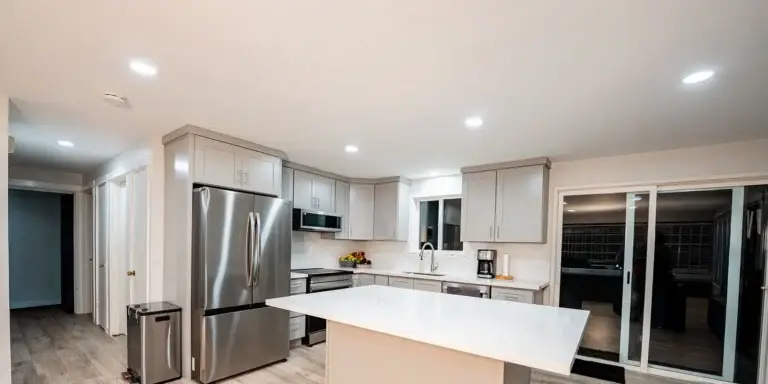
Modern kitchen remodeling Redmond projects often feature induction cooktops, built-in steam ovens, and smart plumbing fixtures. These require dedicated circuits and precise plumbing inspections to ensure leak sensors and high-tech drainage systems are properly installed.

Bathroom “Spa” Conversions

High-end bathrooms in 2026 include wet rooms, steam showers, and leak-detection sensors integrated into the subfloor. Because these projects often involve high electrical loads for heated floors and specialized plumbing for luxury fixtures, they require comprehensive trade permits.

Accessory Dwelling Units (ADUs) and Office Infill

Following Washington’s HB 1337, Redmond permits up to two ADUs per lot. With many tech professionals maintaining hybrid work schedules, converting garages or building backyard offices (DADUs) has become a staple of Redmond’s housing growth. These projects are subject to strict “impact fee” caps but must still meet all fire safety and utility standards.

Cost Breakdown: Budgeting for Tech-Forward Remodels in Redmond

Remodeling in Redmond carries a premium due to high labor demand and the cost of advanced materials. In 2026, homeowners should expect a mid-range house remodeling Redmond cost to fall between $45,000 and $75,000 for major room updates, while full-home technological overhauls can range significantly higher.

2026 Redmond Remodeling Cost Table


Project Type


Hard Costs (Tech & Labor)


Administrative & Design Fees


Total Estimate Range


Kitchen Modernization


$35,000 – $85,000+


$1,200 – $3,500


$36,200 – $88,500+


Primary Bath Retreat


$18,000 – $45,000


$800 – $2,200


$18,800 – $47,200


Detached Office/ADU


$165,000 – $380,000


$4,500 – $9,000


$169,500 – $389,000


Full Electrification


$20,000 – $50,000


$1,000 – $2,500


$21,000 – $52,500


The “Smart” Contingency

A 20% contingency is standard in Redmond. This buffer accounts for the complexity of integrating new smart tech with older wiring and the inevitable discovery of outdated plumbing or structural issues that must be addressed to meet the 2026 code. Additionally, Redmond applies a 4% Technology Surcharge to all permit fees, which should be factored into the administrative budget.

Transform Your Home with Expert Builders

From remodeling to full construction, NW Expert Builders delivers quality craftsmanship, modern design, and seamless project execution—start your free consultation today.

Step-by-Step Application Process Through Redmond ePermitting

Redmond utilizes the Redmond ePermitting Service (REPS), a fully digital platform accessible via Redmond.gov. Paper applications are no longer accepted for residential remodeling.

  1. Preparation: Gather digital site plans, architectural drawings, and energy worksheets. In 2026, the city prefers BIM (Building Information Modeling) files for complex structural projects to allow for faster virtual collision checks.
  2. The Intake Appointment: For larger projects, the city offers virtual “Intake” sessions to ensure your digital files meet the formatting requirements (flattened PDFs, specific naming conventions).
  3. Plan Review: Multiple departments review the plans simultaneously. In Redmond, the Fire Marshal also reviews residential remodels if they exceed certain square footage thresholds (typically 3,600 sq. ft.) to determine if fire sprinklers are required.
  4. Fee Calculation: Fees are based on valuation. For example, a $50,000 remodel involves a base building fee plus 65% of that fee for plan review.
  5. Issuance & Inspections: Once fees are paid, the permit is issued digitally. Inspections are requested through the online portal. In 2026, Redmond has moved toward “Electronic Energy” inspections, requiring verification of exterior continuous insulation before interior finishes are applied.

Timeline Expectations: Navigating Review and Inspection Windows

Efficiency in Redmond’s permitting has improved with AI-assisted plan checks, but the high volume of applications on the Eastside means homeowners must plan ahead.
  • Minor Permits (Water Heaters/Mechanical): 3–5 business days.
  • Standard Remodels (Kitchen/Bath): 4–6 weeks for initial plan review.
  • Large Additions/ADUs: 10–16 weeks. This timeline often includes a “correction cycle” where the city requests more detail on structural loads or energy credit calculations.

Construction Logistics

Construction timelines are impacted by the availability of specialized “Smart Home” technicians and electricians. For exterior projects, the Redmond climate demands a “dry-in” strategy; starting framing in late spring ensures the structure is protected before the fall rains return.

Mistakes That Lead to Permit Rejections or Project Holdups

  • Missing “Energy Credit” Documentation: Washington’s code requires you to “earn” energy credits. Forgetting to specify heat pump water heaters or triple-pane windows can lead to immediate plan rejection.
  • Fire Sprinkler Oversights: Under RMC 15.06.016, if an addition results in a home larger than 3,600 square feet, the entire structure must be sprinklered. Many homeowners overlook this cost until it’s too late.
  • Unlicensed Contractors: Redmond is aggressive about enforcement. Using a contractor without a City of Redmond business license can lead to five-fold fee penalties for repeat infractions.
  • Inaccurate Valuation: Understating the cost of materials and labor to save on permit fees is a red flag. If the city determines the valuation is inaccurate, they will reassess the fees, causing significant delays in permit issuance.

How Professional Contractors Streamline Execution

A tech-aware contractor is essential in Redmond. The “invisible” work often determines how well the finished remodel performs, from routing Cat6a or fiber data cables to checking Wi-Fi signal coverage through new framing, insulation, or structural steel. It also includes coordinating inspection timing, trade sequencing, and system access before finished surfaces are closed.

Synchronized Trade Management

Experienced teams manage the project as one connected workflow. The electrician, plumber, cabinet installer, and automation specialist need to stay aligned during the rough-in phase, when wiring, piping, ventilation, and smart-home infrastructure are still accessible. This helps prevent finished walls from being reopened later to add a missed sensor, outlet, access panel, or data line.
 
In Redmond homes, where custom cabinetry, large-format tile, premium flooring, and detailed finish work are common, avoiding rework is one of the most practical ways to protect the budget. NW Expert Builders helps homeowners plan remodels with better coordination, clearer execution, and fewer avoidable delays.

FAQ – People Also Ask

If you are just adding wireless cameras or a smart doorbell, no. However, if you are installing hardwired lighting control systems, a smart electrical panel, or motorized shades that require new wiring, an electrical permit is required.

Fees are calculated based on valuation. For a mid-sized remodel valued at $50,000, expect total building and plan review fees to fall between $1,500 and $2,800, plus a 4% technology surcharge.

While not mandatory for small interior renovations, many Redmond homeowners are choosing to install "EV-ready" circuits during garage or basement remodels to future-proof their property and take advantage of 2026 federal tax credits.

This is a fee introduced in Redmond's 2026 code. If a project is permitted as a "Green Building" (earning specific incentives) but then changes scope to non-green standards, a fee equal to 50% of the total permit fee is charged.

In Redmond, sprinklers are generally required if an addition brings the total square footage above 3,600, if construction costs exceed the assessed value of the home, or if there is a 100% increase in gross square footage.
Tags :

Picture of Written by: Rocken
Written by: Rocken

Natoque viverra porttitor volutpat penatibus himenaeos. Vehicula commodo si hendrerit.

Latest Post

Categories

The designs you will crave for

Lorem ipsum dolor sit amet consectetur.